
DWI vs DUI in Texas: What You Need to Know
In Texas, the dwi vs dui texas difference is defined by two factors: the driver’s age and the level of alcohol detected. A DUI (Driving Under the Influence) applies exclusively to drivers under 21 who have any detectable amount of alcohol in their system. A DWI (Driving While Intoxicated) applies to adult drivers with a blood alcohol concentration (BAC) of 0.08% or higher, or who show clear signs of impairment. These are not interchangeable terms under Texas law. Knowing which charge applies to your situation determines the penalties you face, the legal process ahead, and the defense strategy that gives you the best outcome.
What are the legal definitions of DWI and DUI in Texas?
In Texas, DUI applies only to minors with any detectable alcohol, while DWI applies to adults with a BAC of 0.08% or higher or visible impairment. These definitions come from two separate sections of Texas law, and they carry very different legal weight.
DWI under the Texas Penal Code is defined as operating a motor vehicle in a public place while intoxicated. “Intoxicated” means either a BAC of 0.08% or higher, or not having the normal use of mental or physical faculties due to alcohol, a controlled substance, or a combination of both. This definition gives law enforcement significant flexibility. An officer can arrest a driver for DWI based on field sobriety tests, dashcam footage, and witness accounts, even without a breathalyzer result. That flexibility is intentional and reflects how broadly Texas defines intoxication.
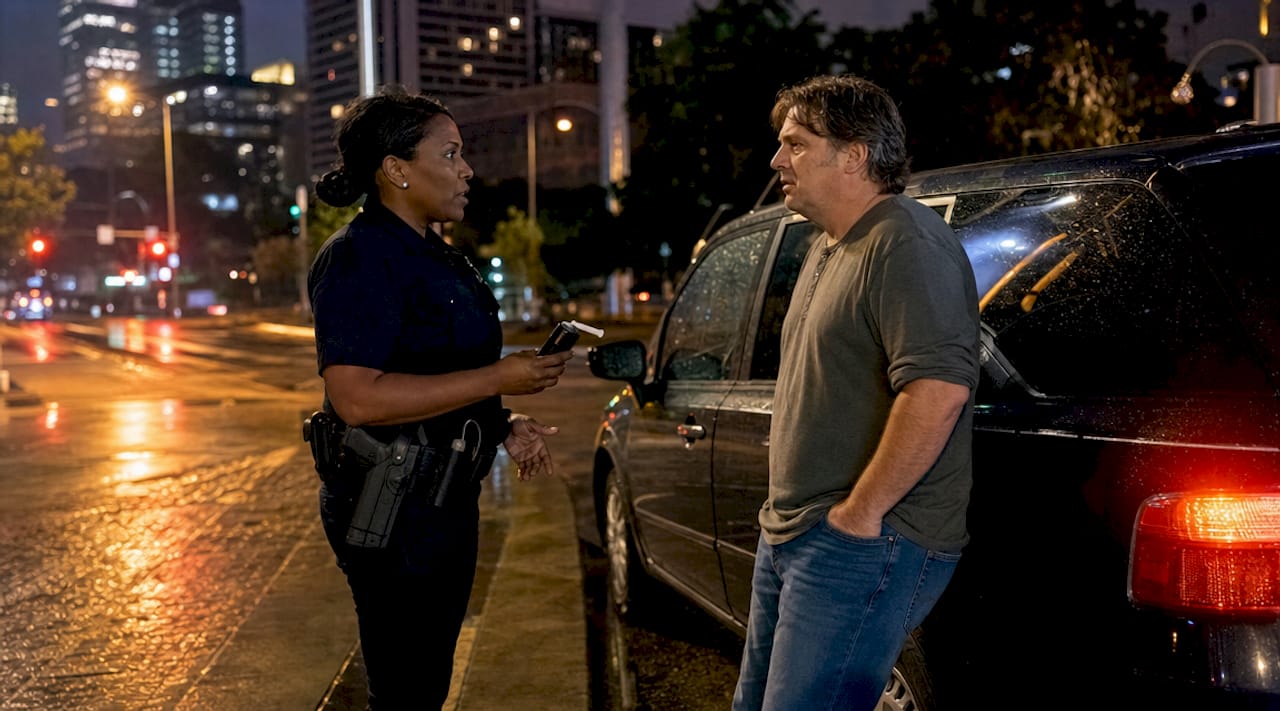
DUI under the Texas Alcoholic Beverage Code targets a narrower group: drivers under 21. Texas enforces a zero-tolerance policy for this age group, meaning any detectable alcohol, even a trace amount below 0.08%, is enough to trigger a DUI charge. The minor does not need to appear impaired. Presence of alcohol alone is the standard.
Key distinctions in legal definitions:
- DWI: Applies to drivers 21 and older; requires BAC of 0.08%+ or demonstrated impairment
- DUI: Applies to drivers under 21; requires only any detectable alcohol presence
- Evidence for DWI: Field sobriety tests, breath or blood tests, officer observation, dashcam footage
- Evidence for DUI: Breath or blood test showing any alcohol, officer observation of alcohol odor
Pro Tip: If you are under 21 and were stopped after having even one drink, you can face a DUI charge regardless of how you performed on field sobriety tests. The standard is presence, not impairment.
How do penalties differ between DWI and DUI charges in Texas?
The penalties for these two charges reflect their different legal classifications. DUI is typically a Class C misdemeanor, while DWI ranges from a Class B misdemeanor all the way to a felony depending on the circumstances.
| Category | DUI (Under 21) | DWI (Adult, First Offense) |
|---|---|---|
| Charge class | Class C misdemeanor | Class B misdemeanor |
| Maximum fine | $500 | $2,000 |
| Jail time | None (typically) | Up to 180 days |
| License suspension | 60 to 180 days | 90 days to 1 year |
| Additional requirements | Alcohol education, community service | Possible ignition interlock device |
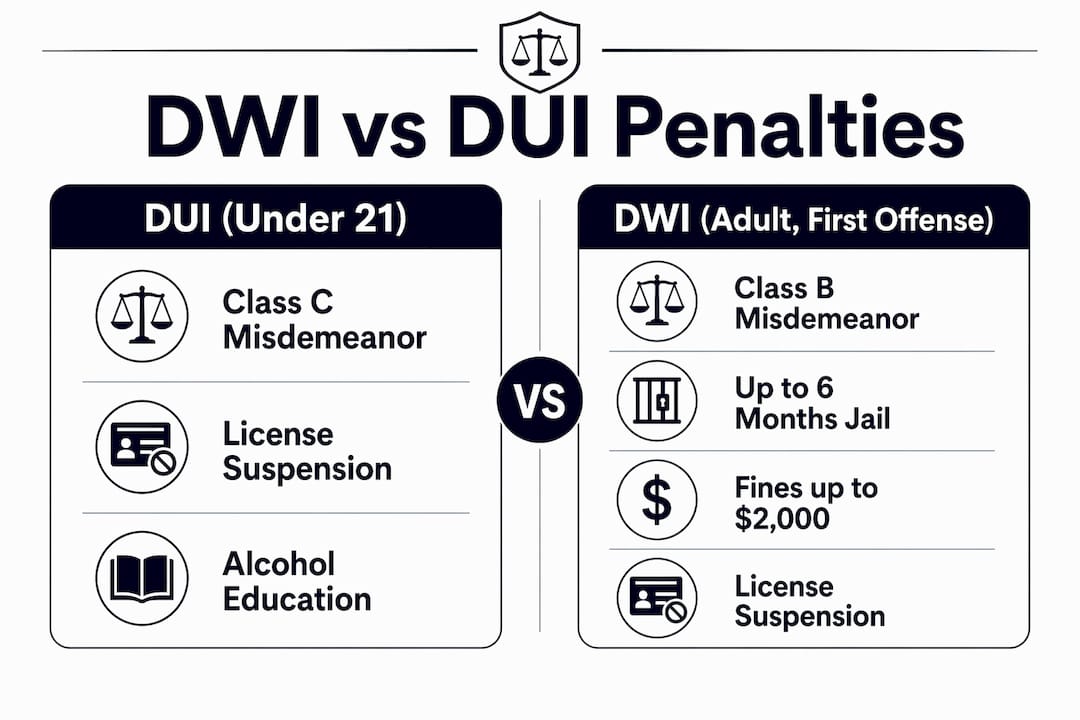
For a first-time adult DWI, penalties include up to 6 months in jail, fines up to $2,000, and license suspension. Those numbers climb sharply with aggravating factors. A BAC of 0.15% or higher elevates a first-offense DWI to a Class A misdemeanor, which carries fines up to $4,000 and up to one year in jail.
Refusal to submit to a breath or blood test carries its own consequences under Texas implied consent law. Refusing a test triggers an automatic license suspension of 180 days for a first refusal. That suspension is separate from any criminal penalty and is handled through the administrative process described in the next section.
Additional penalty escalation factors for DWI:
- A second DWI offense becomes a Class A misdemeanor
- A third offense is a third-degree felony
- DWI can escalate to felony charges when serious injury results, which is charged as intoxication assault
- A child passenger in the vehicle during a DWI is a state jail felony
For minors, a DUI conviction leads to license suspension, mandatory alcohol education, and a lasting mark on their record despite the lower misdemeanor classification. The long-term consequences for a teenager, including effects on college applications and employment, often outweigh the immediate legal penalties.
What is the ALR process after a DWI arrest in Texas?
A DWI arrest in Texas triggers two separate processes: a criminal case handled by the courts and an Administrative License Revocation (ALR) case handled by the Texas Department of Public Safety (DPS). Most people focus on the criminal case and miss the ALR deadline entirely. That mistake costs them their license before the criminal case even begins.
Here is how the ALR process works, step by step:
- You are arrested for DWI. At the time of arrest, your license is confiscated and you receive a temporary driving permit valid for 40 days.
- The 15-day clock starts immediately. Failure to request an ALR hearing within 15 days results in automatic suspension of your driving privileges, regardless of what happens in your criminal case.
- Your attorney requests the ALR hearing. This pauses the automatic suspension and schedules a hearing before the State Office of Administrative Hearings (SOAH).
- The hearing examines four specific issues. The ALR hearing addresses reasonable suspicion for the stop, probable cause for the arrest, whether the officer properly requested a specimen, and whether you refused or had a BAC of 0.08% or higher.
- DPS must prove all four issues by a preponderance of evidence. If they cannot, your driving privileges are restored. If they succeed, the suspension is upheld.
- Suspension lengths vary by circumstance. A failed BAC test triggers a 90-day suspension for a first offense; refusal triggers 180 days; repeat refusals carry longer periods.
Pro Tip: The ALR hearing is also a valuable discovery tool. Your attorney can cross-examine the arresting officer under oath before the criminal trial, which reveals weaknesses in the prosecution’s case early.
You can learn more about this process through the ALR hearing resources at Dwimontgomery, which walks through what to expect at each stage.
How do DWI and DUI charges affect your daily life in Texas?
The legal definitions matter, but what most people want to know is what these charges actually do to their lives. The practical consequences extend well beyond the courtroom.
Consider two common scenarios. A 19-year-old college student in The Woodlands is stopped after leaving a party. A breathalyzer shows a BAC of 0.04%, well below the adult legal limit. Under Texas law, that reading is enough for a DUI charge. The student faces a Class C misdemeanor, but also mandatory alcohol education, community service, and a license suspension that disrupts their commute to school or work. That record follows them into job applications and professional licensing processes.
Now consider a 35-year-old professional in Conroe stopped at a checkpoint with a BAC of 0.09%. That is a first-offense DWI, a Class B misdemeanor. The immediate consequences include potential jail time, fines, and license suspension. The longer-term effects include a criminal record visible to employers, a significant increase in auto insurance rates, and possible installation of an ignition interlock device as a condition of a restricted license.
When DWI charges escalate, the consequences become far more serious. Felony DWI carries substantially harsher penalties, including longer imprisonment and higher fines. A DWI that causes serious bodily injury to another person becomes intoxication assault, a third-degree felony. A fatal accident elevates the charge to intoxicated manslaughter, a second-degree felony.
Key practical impacts to understand:
- Both DWI and DUI trigger license suspension through the ALR process
- Insurance premiums typically increase significantly after either conviction
- A DWI conviction creates a permanent criminal record in Texas, which cannot be expunged in most cases
- A DUI for a minor, while a lower-class offense, still appears on background checks and can affect scholarships and professional licensing
- Immediate legal representation improves outcomes at both the ALR stage and in criminal court
What are the key similarities and differences between DWI and DUI in Texas?
Both charges involve alcohol and a motor vehicle, and both trigger the ALR administrative process. Beyond that, they diverge significantly in legal classification, evidence standards, and consequences.
| Feature | DWI | DUI |
|---|---|---|
| Applicable age | 21 and older | Under 21 |
| Governing code | Texas Penal Code | Texas Alcoholic Beverage Code |
| BAC threshold | 0.08% or impairment | Any detectable amount |
| Charge class | Class B misdemeanor to felony | Class C misdemeanor |
| ALR suspension triggered | Yes | Yes |
| Can escalate to felony | Yes | No (remains misdemeanor) |
| Zero-tolerance standard | No | Yes |
The most important procedural difference is the evidence standard. DWI requires proof of intoxication, which means the prosecution must show a BAC at or above 0.08% or demonstrate that the driver lacked normal use of their faculties. DUI requires only proof that alcohol was present in the minor’s system. That lower bar makes DUI charges easier to prosecute but also means certain defenses, like challenging the degree of impairment, are less available.
Both charges share one critical procedural overlap: the 15-day ALR deadline. Whether you are 19 or 45, whether you are facing a DUI or a DWI, missing that deadline means automatic license suspension. That single deadline is where many cases are lost before they even begin.
Key takeaways
In Texas, DWI and DUI are legally distinct charges defined by the driver’s age and BAC threshold, and each carries separate criminal penalties and an independent administrative license suspension process.
| Point | Details |
|---|---|
| Age determines the charge | DUI applies to drivers under 21; DWI applies to adults 21 and older. |
| BAC thresholds differ | DWI requires 0.08%+ or impairment; DUI requires any detectable alcohol. |
| Penalties escalate with circumstances | DWI can reach felony level; DUI remains a Class C misdemeanor but still carries lasting consequences. |
| The 15-day ALR deadline is non-negotiable | Missing it causes automatic license suspension, separate from the criminal case outcome. |
| Both charges affect your record and insurance | Neither charge is minor in practical terms, regardless of the legal classification. |
What I’ve learned from years of DWI and DUI cases in Texas
After working inside the Texas court system as both a judge and a prosecutor, I have seen one pattern repeat itself more than any other: people underestimate the DUI charge because it sounds less serious than DWI. That assumption causes real harm.
A Class C misdemeanor for a 19-year-old is not a slap on the wrist. It is a permanent record entry that shows up when that person applies for a nursing license, a teaching certificate, or a federal job. The courts treat it as minor. Employers and licensing boards do not.
The second pattern I see constantly is people missing the 15-day ALR deadline because they did not know it existed. The criminal case gets all the attention, and the administrative process runs quietly in the background until the suspension hits. By then, it is too late to request a hearing. That is a preventable loss, and it happens because people wait too long to get legal counsel.
My honest advice: treat any alcohol-related driving charge in Texas, whether it is a DUI for a minor or a first-offense DWI, as a serious legal matter from the moment of arrest. The first 15 days after an arrest are the most consequential. What you do in that window shapes everything that follows.
— Gregg
Facing DWI or DUI charges in Texas? Here’s how Dwimontgomery can help

Dwimontgomery, led by former Texas Judge and Prosecutor Mike Seiler, focuses exclusively on defending DWI and DUI charges throughout Montgomery County. Whether you are facing a first-time DWI, an underage DUI charge, or a more serious felony DWI, the firm brings courtroom experience that most defense attorneys simply do not have. Mike Seiler has sat on both sides of the courtroom, which means he knows exactly how prosecutors build their cases and where those cases can be challenged. If you have been arrested in Conroe, The Woodlands, Magnolia, or anywhere in Montgomery County, contact Dwimontgomery immediately. The 15-day ALR deadline does not wait, and neither should you.
FAQ
What is the main difference between DWI and DUI in Texas?
DUI applies to drivers under 21 with any detectable alcohol, while DWI applies to adults with a BAC of 0.08% or higher or demonstrated impairment. They are governed by different Texas codes and carry different penalties.
Can a minor be charged with DWI instead of DUI in Texas?
Yes. If a driver under 21 has a BAC of 0.08% or higher or shows clear signs of intoxication, they can be charged with DWI rather than DUI, which carries significantly harsher penalties.
How long is a license suspended after a DWI in Texas?
A failed BAC test results in a 90-day suspension for a first offense, while refusing to test triggers a 180-day suspension. These suspensions are handled through the ALR process, separate from any criminal penalties.
What happens if you miss the 15-day ALR deadline in Texas?
Missing the 15-day deadline to request an ALR hearing results in automatic license suspension, regardless of the outcome of your criminal case. This deadline applies to both DWI and DUI arrests.
Does a DUI conviction stay on a minor’s record in Texas?
Yes. A DUI conviction for a minor remains on their record and can affect college admissions, professional licensing, and employment, even though it is classified as a Class C misdemeanor.
Recommended
- Montgomery County DWI Lawyer | Former Judge Mike Seiler – The Seiler Law Firm
- Boating DWI – The Seiler Law Firm
- How to Clear a DWI Warrant in Texas: 2026 Guide
- Intoxication Assault – The Seiler Law Firm